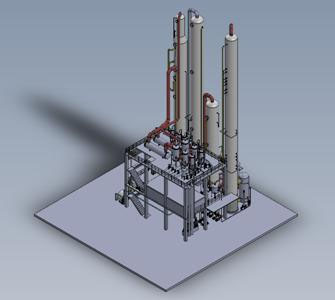
 1. Low energy consumption, 1.2 tons of alcohol consumption. 2. One steam passes through the reboiler to heat the fine tower II, the fine tower II top wine vapor heats the crude tower II through the reboiler, the crude tower II top wine vapor directly heats the fine tower I, and the fine tower I tower top wine passes through The reboiler heats the crude column I. One tower enters the steam and four towers to achieve three-effect thermal coupling to achieve energy saving. 3. Using the differential pressure and temperature difference between the tower and the tower to gradually exchange heat through the reboiler, the heat can be utilized to the maximum extent, thereby effectively saving energy.The key to the energy saving of the process is the heating mode. The primary steam is indirectly heated by the reboiler to clean the tower II. The steam condensed water preheats the mature fermentation mash and the crude alcohol and then returns to the boiler soft water tank for reuse; the refined tower II wine vapor passes through the reboiler. The crude column II is heated; the fine column I wine vapor is heated by the reboiler to the crude column I. In this process, the crude tower I is a negative pressure tower, the coarse tower II and the fine tower I are atmospheric pressure towers, and the fine tower II is a positive pressure tower. The pressure difference and the temperature difference are used for stepwise heating. One tower enters the steam and three towers to achieve three-effect thermal coupling to achieve energy-saving purposes.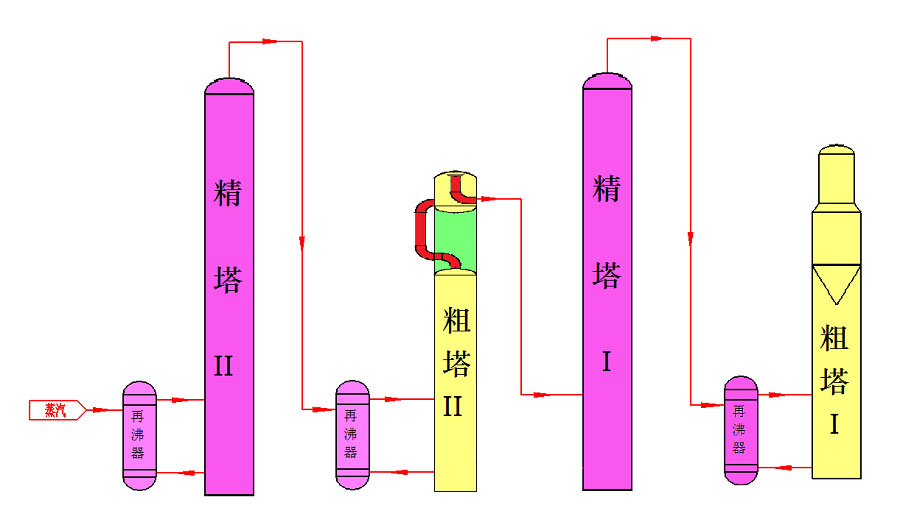
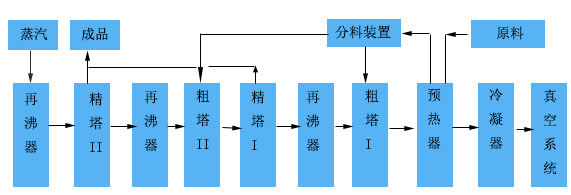 The two-stage preheated fermentation mash first enters the top of the crude column I to remove the aldehyde, and then divides the mash into two parts through the distributor: one part enters the coarse column II, and the other part enters the coarse column I. After the fermented mash enters the crude tower II, the bad liquid is removed from the bottom of the tower, and the crude liquor enters the fine tower I to be concentrated and discharged, and part of the finished alcohol is taken out at the upper side line. After the bottom of the refined tower I light wine and the crude tower I top wine vapor condensate, it enters the fine tower II, concentrates and removes in the fine tower II, and takes out some of the finished alcohol in the upper side line, and the high boiling point impurities such as fusel oil Take out from the lower part of the fine tower II.
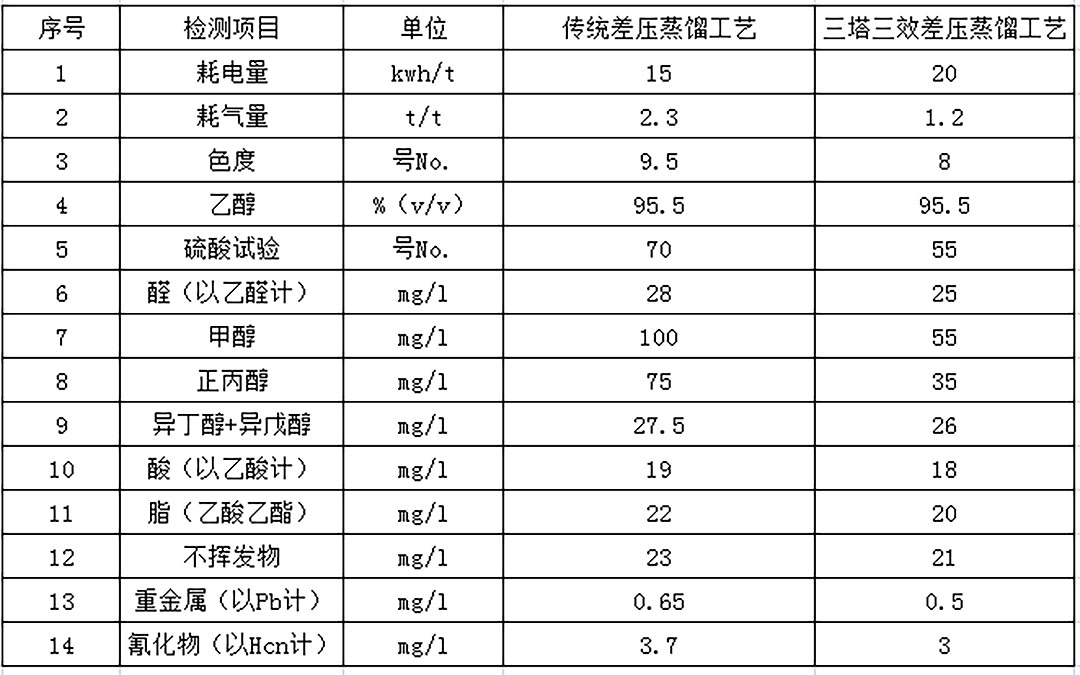
 Seven, the general level of alcohol consumption and quality comparison table